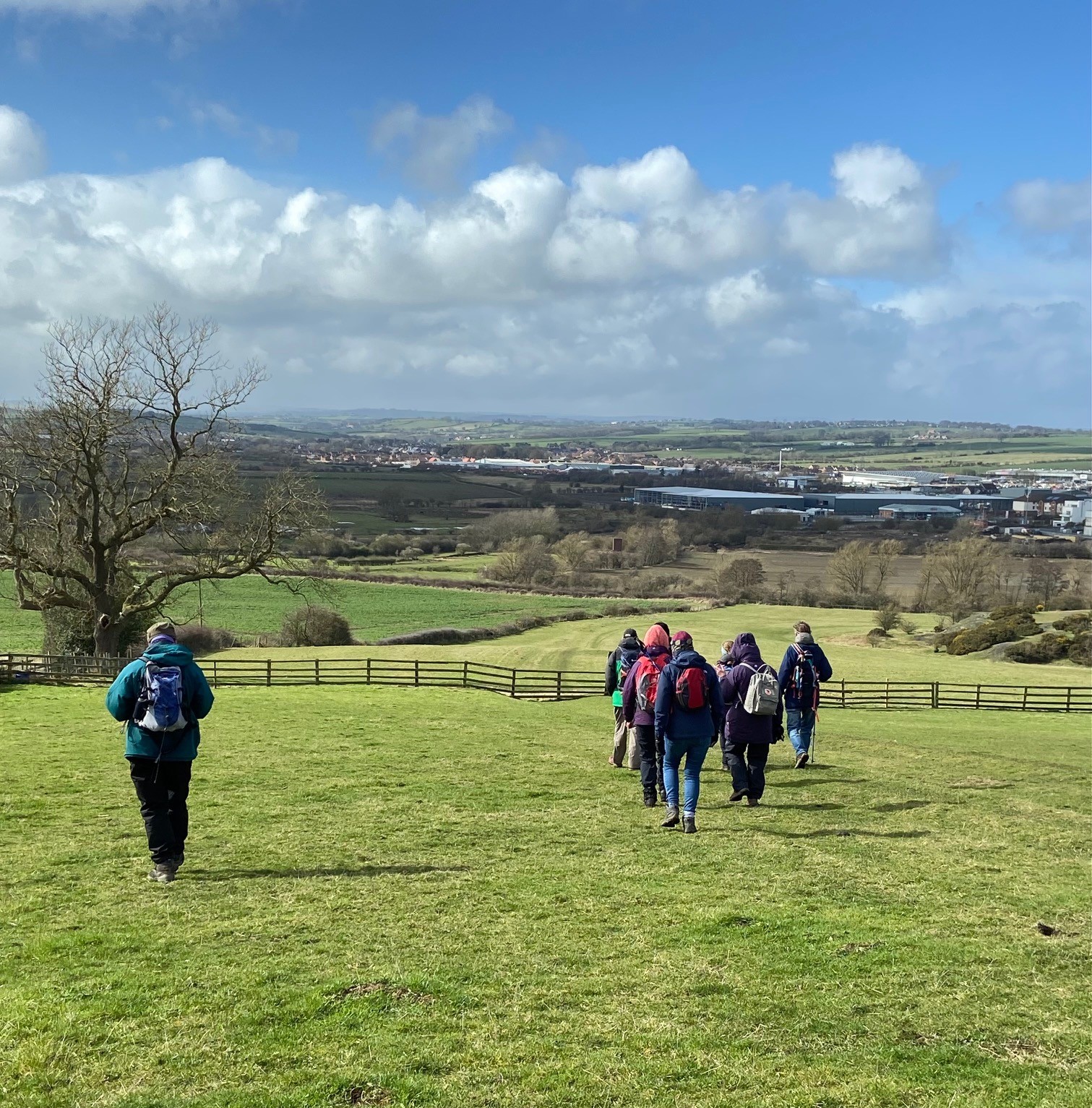
As a new u3a member I signed up for the 6/8 mile walking group, it had no walks and no leader. I waited patiently for something to happen, it didn't. Gerald Cumming appealed for volunteers to lead for the group and I responded. It was either that or continue to wait patiently. Life's too short and there's many a path not taken, thought I. So there I found myself, on Thursday the 23rd of March, in the car park of the Locomotion Museum Shildon, leading the Group's first walk in 2023.
While Shildon was not exactly, (maternity arrangements intervened), the town of my birth, I was brought up there. My family had close connections to the railways, my first walk would explore the historic railway and incline routes which laid the foundations of the worldwide transport systems we now see. Those paths lead through strands of my young life, a nostalgia trip for me.
The due processes of introductions/risk assessment etc. complete, the group of ten set out on a brisk but clear day, heading west on tarmac roads. As we walked to join the old route of the Black Boy branch line, we touched on the edge of the old Soho Railway Works before moving on to the King William, (pub now renamed), past the old S&DR railway cottages at the top of the former Black Boy incline and on to Eldon Lane. The cinder path had previously been restored but now shows signs of deterioration.
In Eldon Lane the former South West Durham Hotel has been converted into a community drop in centre. I’d been introduced to venue by John Raw, who'd accompanied me on a recce trip in the previous week. We were kindly welcomed there and provided with tea and the use of their facilities. Following a lunch break our group headed back up the old line to turn and cross the Bishop Auckland -Darlington railway line by a footbridge. The central position, on the bridge, gives a clear view back through the distant tunnel to Shildon.
The track from the bridge emerges onto Adelaide Bank adjacent to the site of the old Adelaide colliery. Nothing remains now of the mine or its surrounding spoil heaps, apart from random pieces of dressed stone. My Grandfather worked here, as a miner and spoke of walking underground to work underneath South Church, about a mile distant.
Crossing the road we headed towards Tindale Crescent in the distance before turning onto Dere Street, the old Roman Road, which carries on to Vinovium on the outskirts of Bishop Auckland. Heading south on the road, on meeting the intersecting Brussleton Incline, we turned back towards Shildon.
Brussleton Incline has been taken under the wing of a group of the same name, The Brussleton Incline Group, (BIG) who are working to preserve original features. Trevor Horner, of BIG, very kindly agreed to meet us and gave a short description of the project before accompanying us to Brussleton house and the original incline engine house. Fred Wright, a former fellow apprentice at BR Shildon, was in situ. His family had been long time residents of Brussleton and they elected to remain when much of the old settlement was demolished.
Moving past a line of old stone railway sleepers we used the underpass, below the busy road, to emerge, after a short walk, at the top of what had been Shildon Railway Waggon Works, (The Shops).
A step back in time for me, to my apprenticeship days. What was now a tarmac road had been a multi track railway line, where steam locomotives worked, the remaining old buildings, the workplace of 2800 men and women. A town within a town.
More railway stuff followed as we moved through the old works and down to the Masons Arms Crossing. Now gone but the place where Locomotion Number One was coupled to the first train of railway waggons and carriages and began its historic journey. The Brussleton Incline Group has laid stone sleepers and sections of rail track near the site.
The old S&DR route took us back to Locomotion Museum, the end of our trip. It had brought back memories for me. I hope I was able to share them, together with the history of Shildon and its railway inclines.