

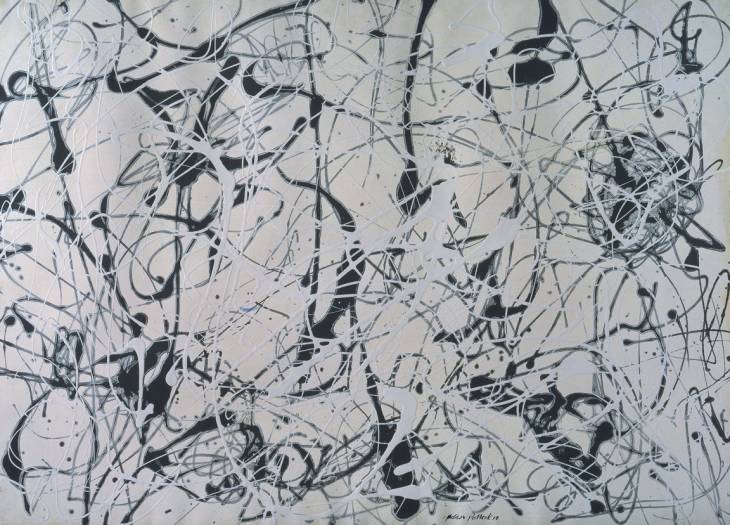


The first film was a BBC film fronted by Matthew Collins, who dealt with the concept of beauty, under a number of topics including nature, colour, pattern and others. He considered various examples of art including painting and sculpture and perhaps surprisingly architecture and engineering, He began by looking at the relationship of the Millau Viaduct in southern France with nature, as it flies across the valley of the River Tarn. He certainly convinced me that the presence of Lord Foster’s bridge enhances the natural contours of the valley and surrounding hills. By complete contrast his analysis of Piero della Francesca’s painting of the ‘Madonna del Parto’, one of the few paintings of the Virgin Mary during her pregnancy, included not only her physical beauty, but the use of the pavilion in which she is standing as a metaphor for a womb and the way in which Piero uses complementary and balancing colour in the clothing of the angels on each side to reinforce the whole composition. In other parts of the film Collins compared the patterns in a Jackson Pollock 'drip painting' with the patterns in Van Gogh's painting of Almond Blossom produced during his time in the San Remy sanatorium. Finally he left us with 'The Snail' one of Matisse's coloured paper collages and the injunction to examine all works of art to see how they approach the concept of beauty and whether or not they succeed.

The Bridge at Nami Jean Corot
The second film, produced by the National Gallery, dealt with the development of landscape painting from its earliest manifestation in caves and later in classical art, as a supporting element, through its increasing prominence in renaissance painting, where the landscapes of Tuscany and Umbria can be recognised as the backdrop to biblical and classical scenes. This took us to later periods when landscape became the subject itself in works by artists like Poussin, Lorraine, Constable and Turner. The film concluded with the works of the Impressionists, who were freed by technical developments such as oil paint in tubes and portable easels, enabling painting to be carried out ‘en plein air’ so that speed and lively brush work enhance the viewer’s appreciation of the scene.

The Roman Campagna Claude Lorraine