Day 1 - Belton House, Lincolnshire
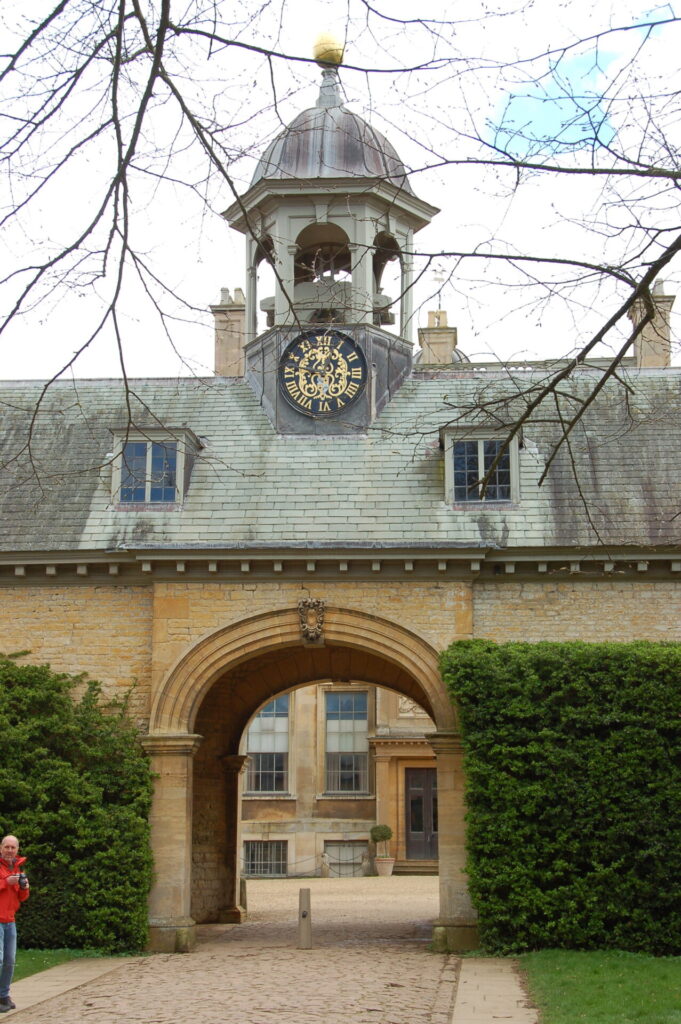
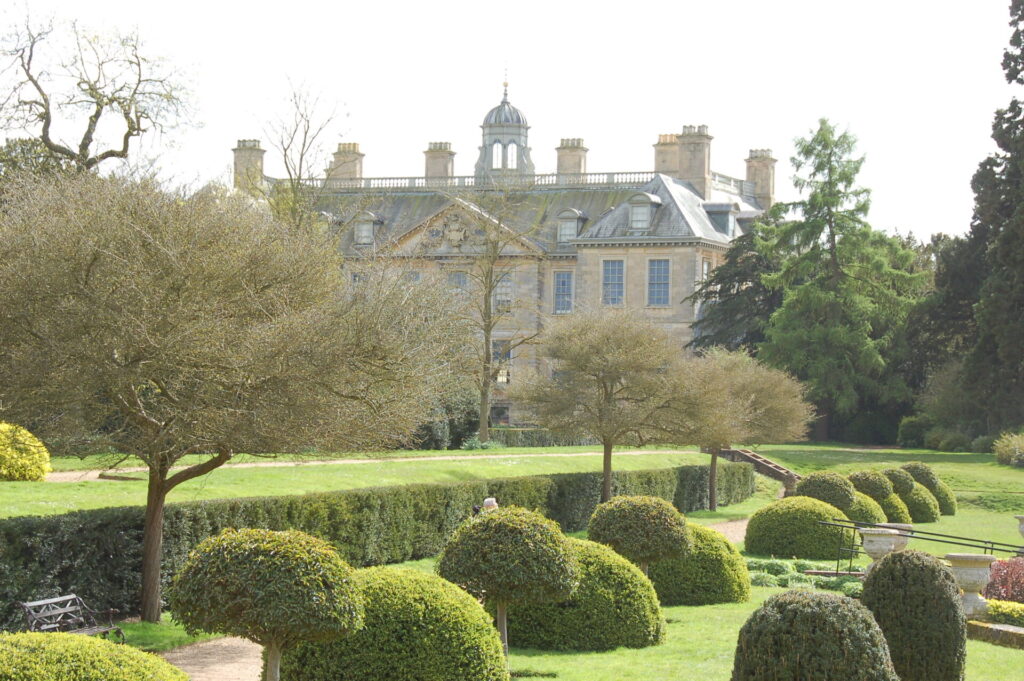
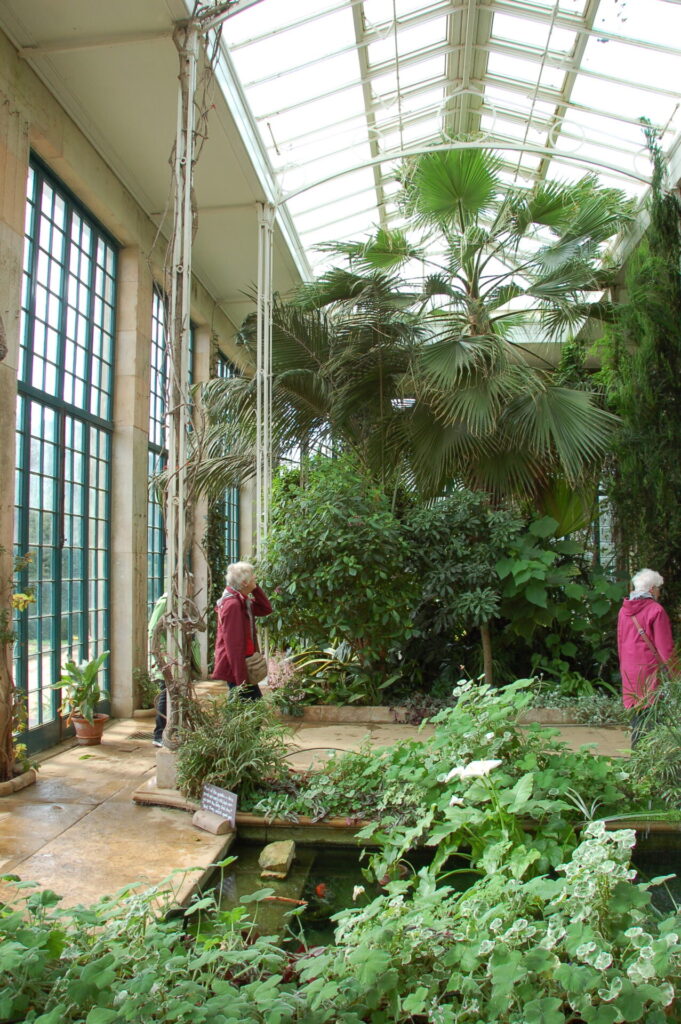
Our journey to Cambridge was broken at Belton House in Lincolnshire. Belton House was the seat of the Brownlow family until the 1980’s when they were forced to relinquish the house and the estate to the government in lieu of death duties. Now in the care of the National Trust the house and grounds are in first class order. The architecture of the house is from that period between the English baroque (Wren and Hawksmoor) and full blown Palladianism (James Paine, Colen Campbell) so there are walls with classical detailing and pediments coupled with pitched roofs with bracketed overhanging eaves. Inside there are sumptuously furnished rooms with panelled walls and Grinling Gibbons carvings; a magnificent library, and splendid collections of silverware and china. There is a Dutch garden and an Italian Garden with one of the earliest examples of a cast iron framed orangery.
Day 2 - Girton College and Cambridge City Centre
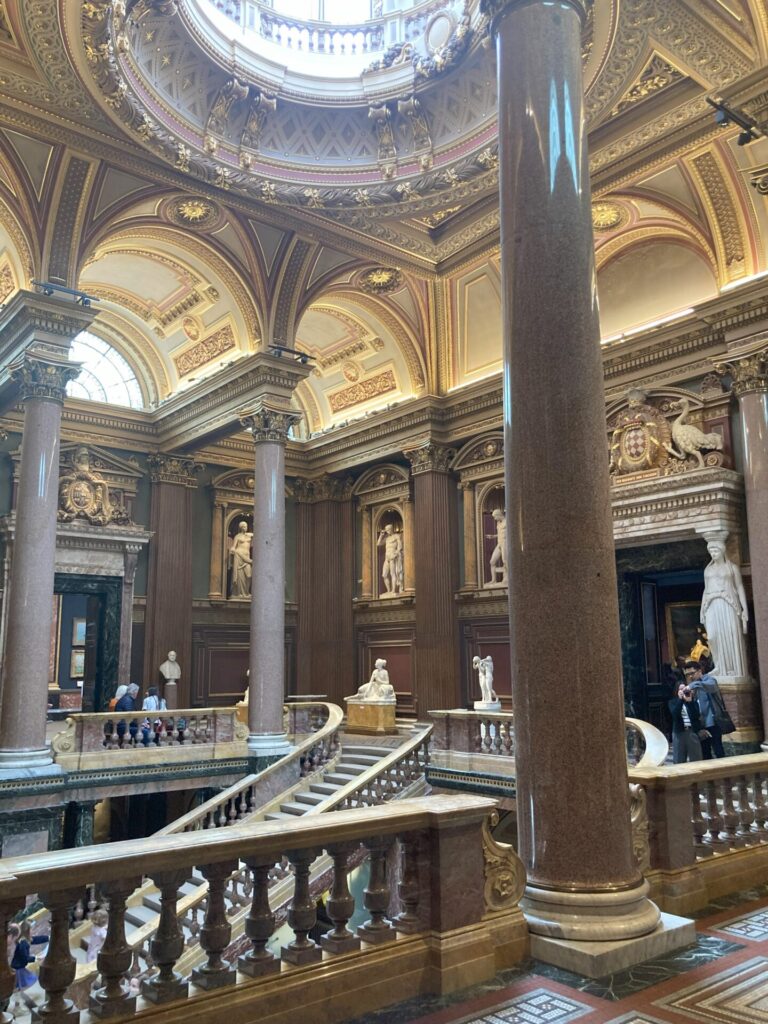
The rest of the day was free for members to make their own explorations. Some of our members decided to visit the University’s Botanic Gardens, which were founded in 1825 by John Stevens Henslow, Professor of Botany. They now cover 40 acres and are the largest university owned botanic garden in the world with over 8000 plant species. The gardens were magical with magnolia and cherry trees in blossom and marsh marigolds flowering by the stream. However, the star of the garden was the flower of the Jade Vine which is native to the Philippines and thus was growing in the glasshouse. It flowers in early spring and was stunning both in colour and shape with cascading clusters of jade coloured claw shaped flowers. Other members of the group took the opportunity to visit the Fitzwillam Museum, which houses the University's extensive art collection. This rather swaggering Edwardian neo-Classical building seems somewhat at odds with the predominantly Elizabethan and Georgian surroundings, but its peerless contents, including works from the renaissance, the beaux arts, the impressionists all the way to contemporary works are worthy of hours of contemplation.
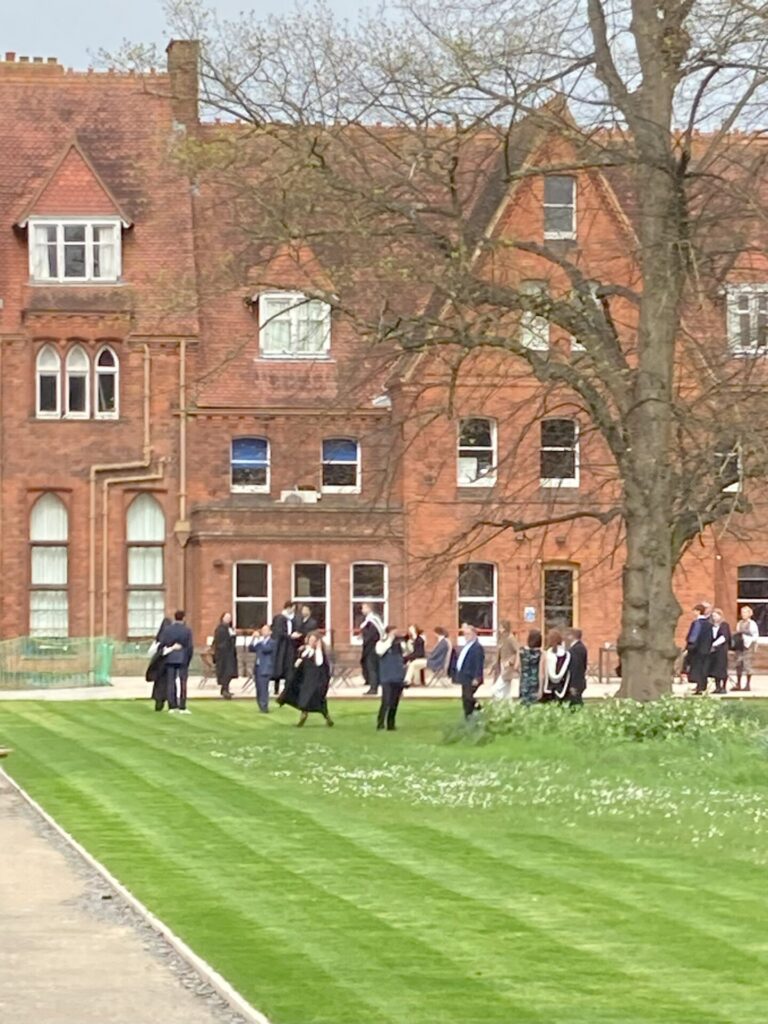
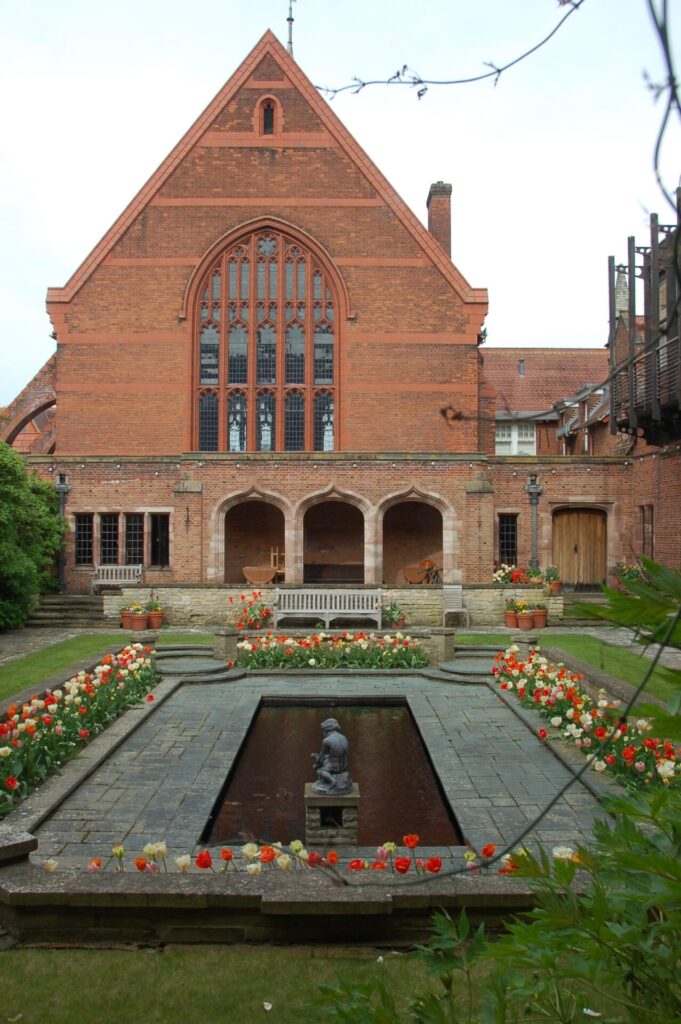
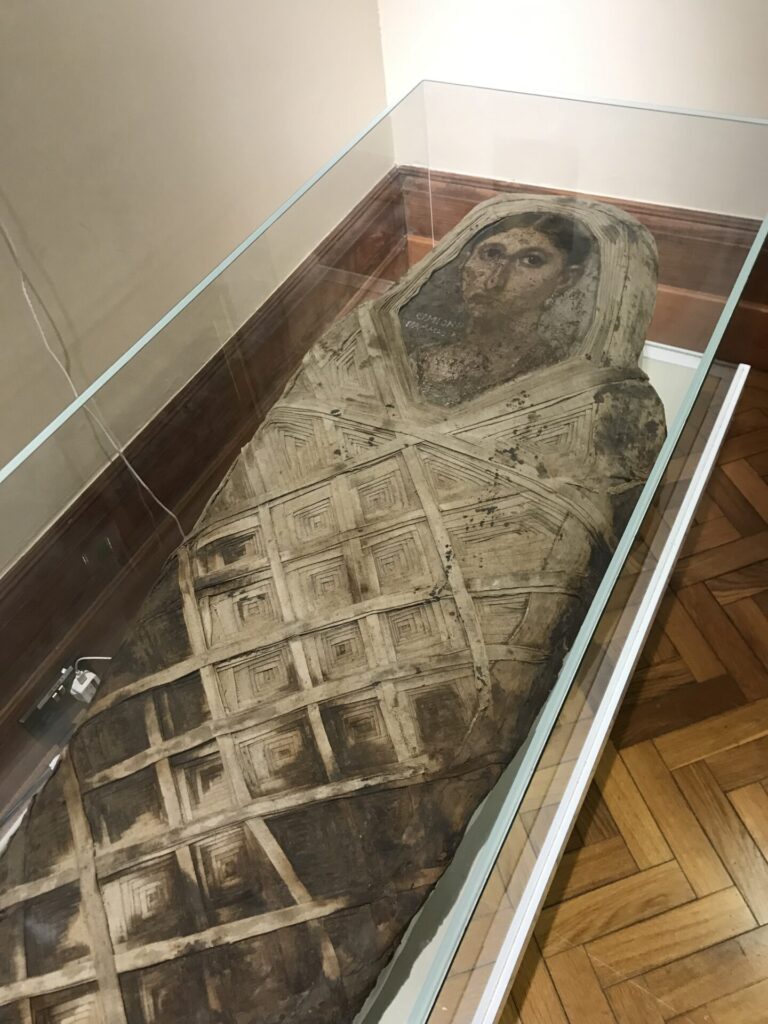
On Saturday our first visit was to Girton College, built from 1872 to 1887 to the designs of Sir Alfred Waterhouse in his usual neo-Gothic style. It was the first women’s college in Cambridge and has a substantial art collection. Our visit coincided with an exhibition called ‘Peoples’ Portraits’ created to celebrate the millennium it reflects the lives of a cross section of people captured by members of the Royal Society of Portrait Painters. It was also the day when Masters students resplendent in their hoods and gowns gathered before being taken into Cambridge to receive their degrees at the Senate House. We also were able to access the College's Egyptology museum containing Hermione, the oldest fellow of the College - a perfectly preserved female mummy.
Ancient and Modern, Queens' College Contrasts.
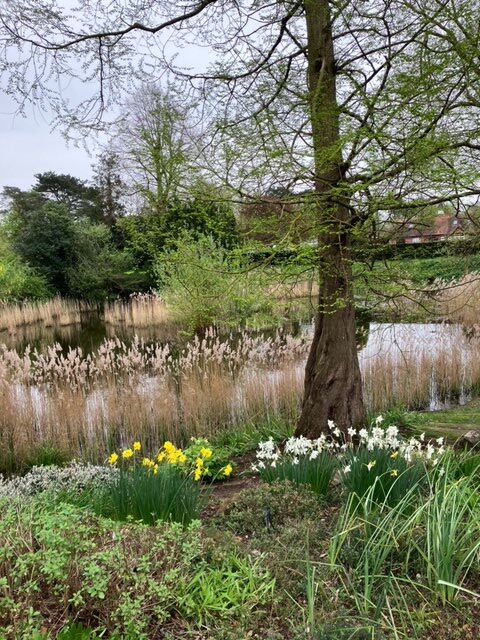
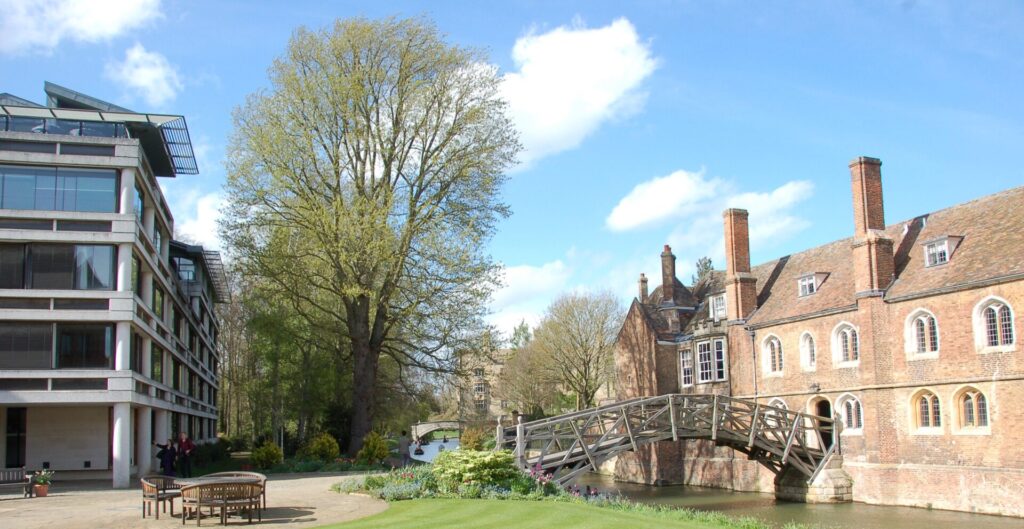
Day 3 - A Walking Tour of Cambridge and Queens' College
Sunday began with a walking tour of Cambridge and, in what seems to becoming a habit, we were joined by a group from another U3A, this time Stansted and Mountfitchet. Our tour took in St. Benet’s, the oldest church in Cambridge. this was followed by The Eagle pub with its association with wartime aircrew, their descendants and successors, as well as being the watering hole of scientists from the nearby Cavendish Laboratory. It is thought that regulars here were probably the first people to learn of the discovery of the DNA double helix. The Cavendish Laboratory itself came next, home of 30 Nobel Laureates and counting. The highlight was a tour of Queens’ College where we walked through from the Gatehouse at the oldest part of the College built in Tudor brickwork in around 1450 through the Old Court, past the Old Hall where students fellows and the Master take their meals, through the Cloister Court (1590) with the President’s Lodge, the only half-timbered building remaining in Cambridge. We crossed the Wooden (‘Mathematical’) Bridge over the Cam to Cripps Court, the modern part of the College built from 1972 – 2007. Our guide, Bev then gave us an explanation of the teaching system in Cambridge where students take lectures and laboratory work etc. in the various departments but receive tutorials in their own college. We then explored the New Chapel and Walnut Tree Court. Leaving Queens’ our tour continued along Kings Parade passing Kings College and the Senate House before finishing outside the entrance to Trinity College.
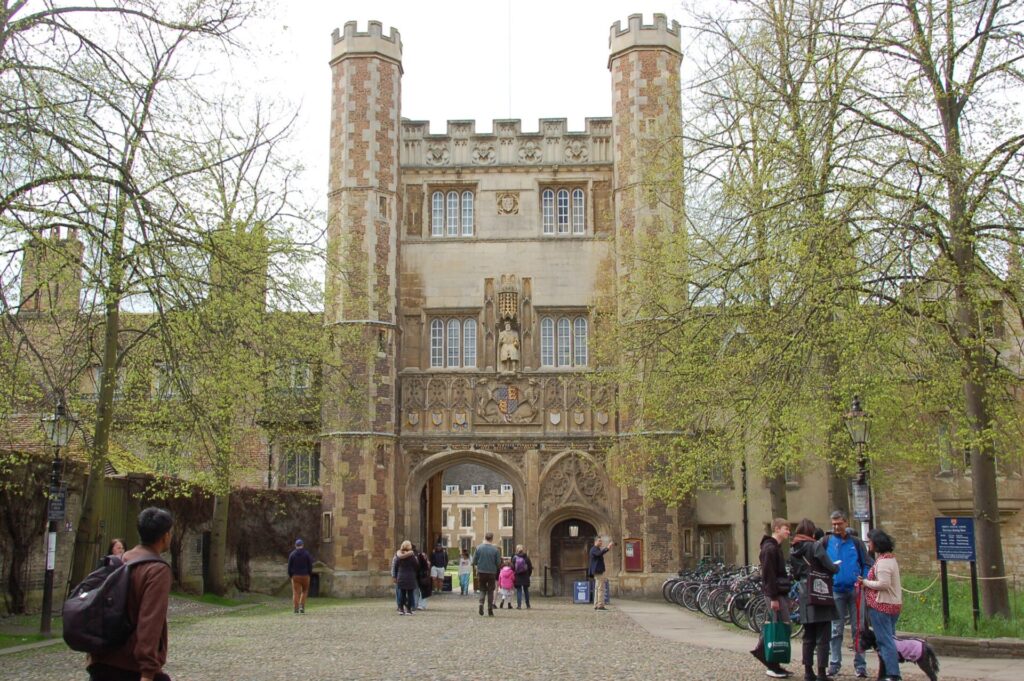
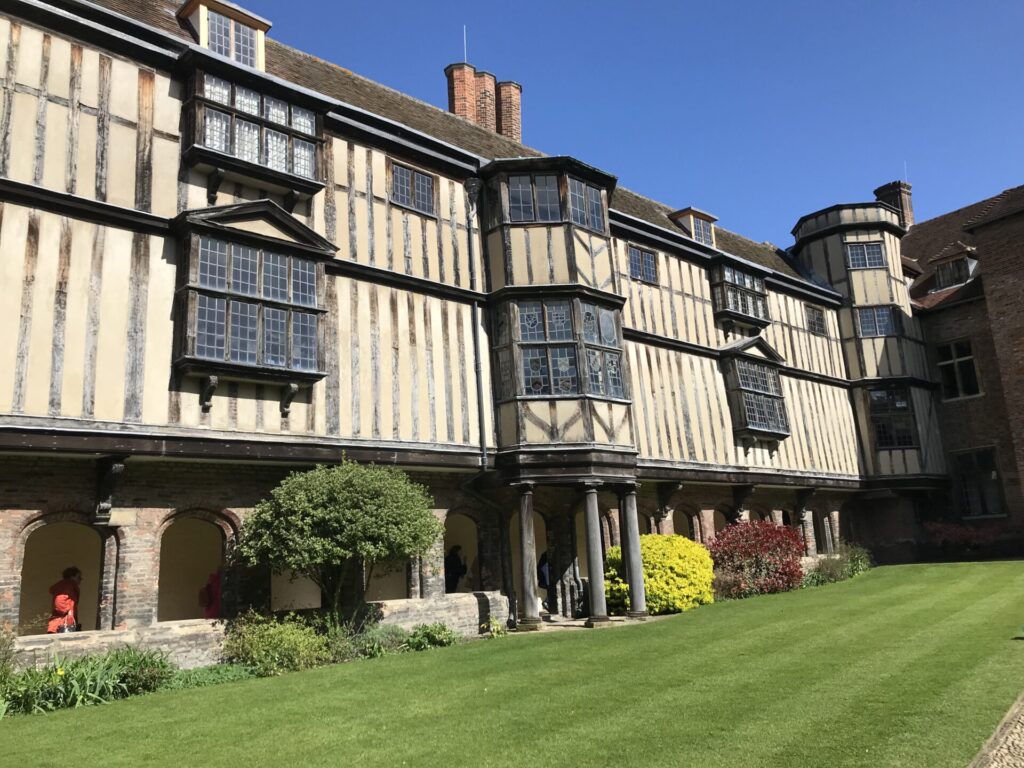
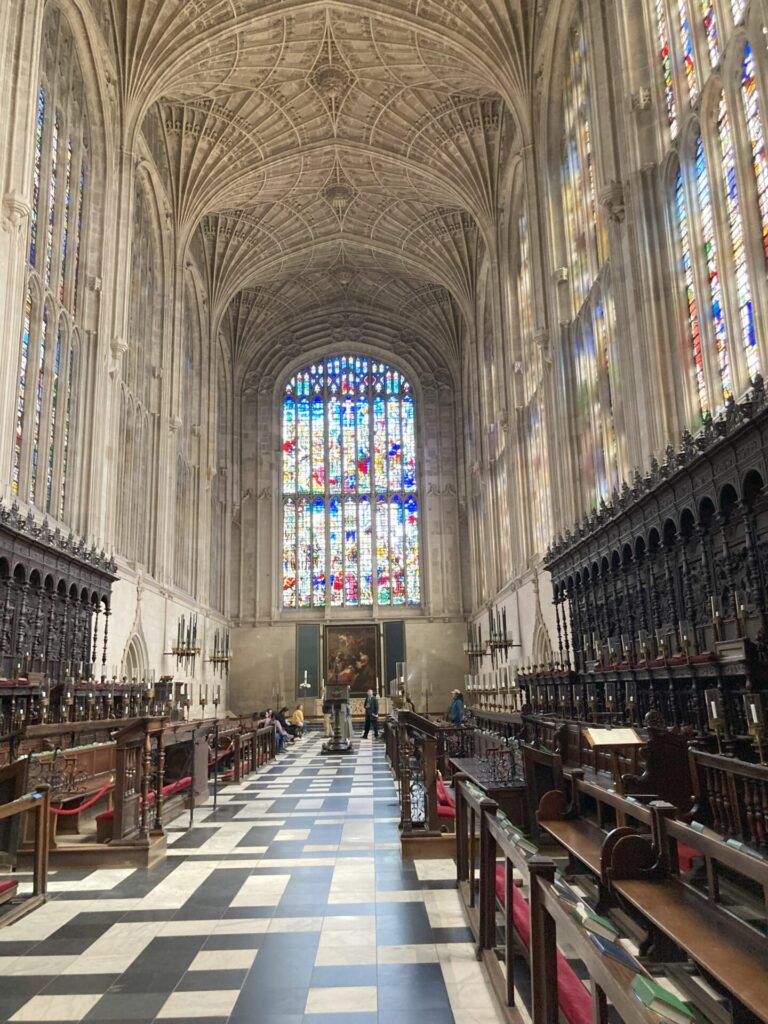
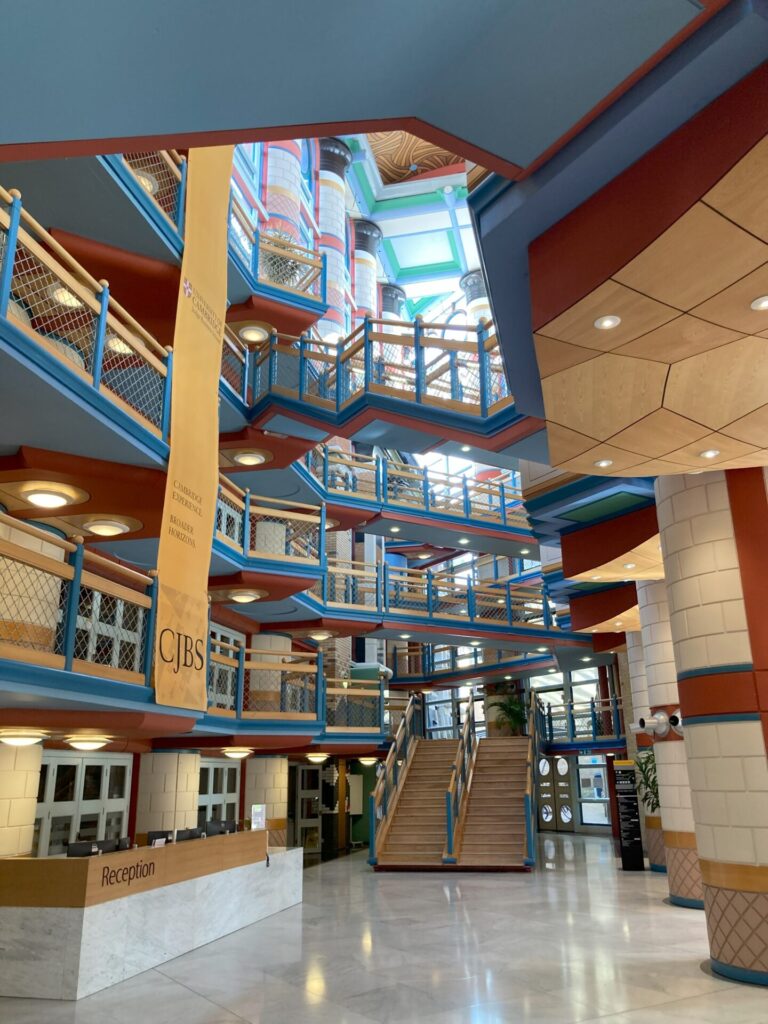
Following the guided walk the group were free to explore central Cambridge. The University Colleges have been wealthy patrons of architecture since their inception and so there are notable buildings of all ages and types to discover with two examples below.
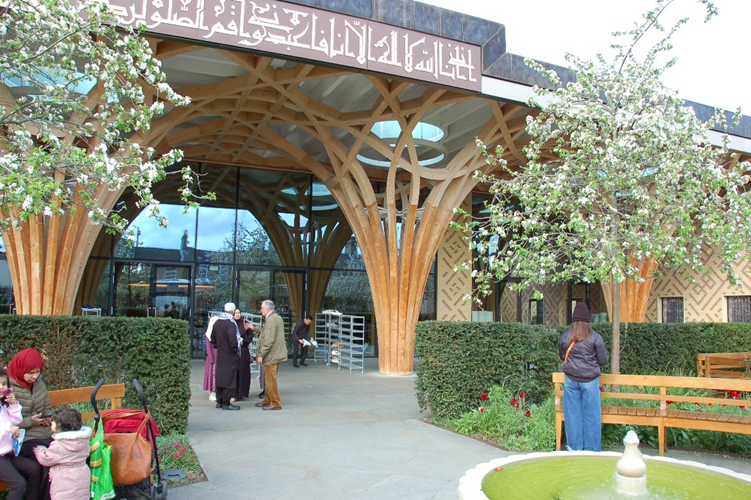
During the return to our hotel we made a detour to see the Cambridge Central Mosque, which was shortlisted for the RIBA's Stirling Prize 2021. Despite our unannounced arrival, we were made most welcome and given an impromptu guided tour by one of the administrators. The building is striking for its structure with the roof supported by a series of tree-like columns made from laminated timber in the centre of each of these is a circular rooflight bringing light into the building’s heart. Walls are constructed in brickwork patterned in abstract representations of Arabic script and the landscaping at the building frontage is based on an Islamic Garden.
Day 4 - The Seeley History Library and the American War Cemetery
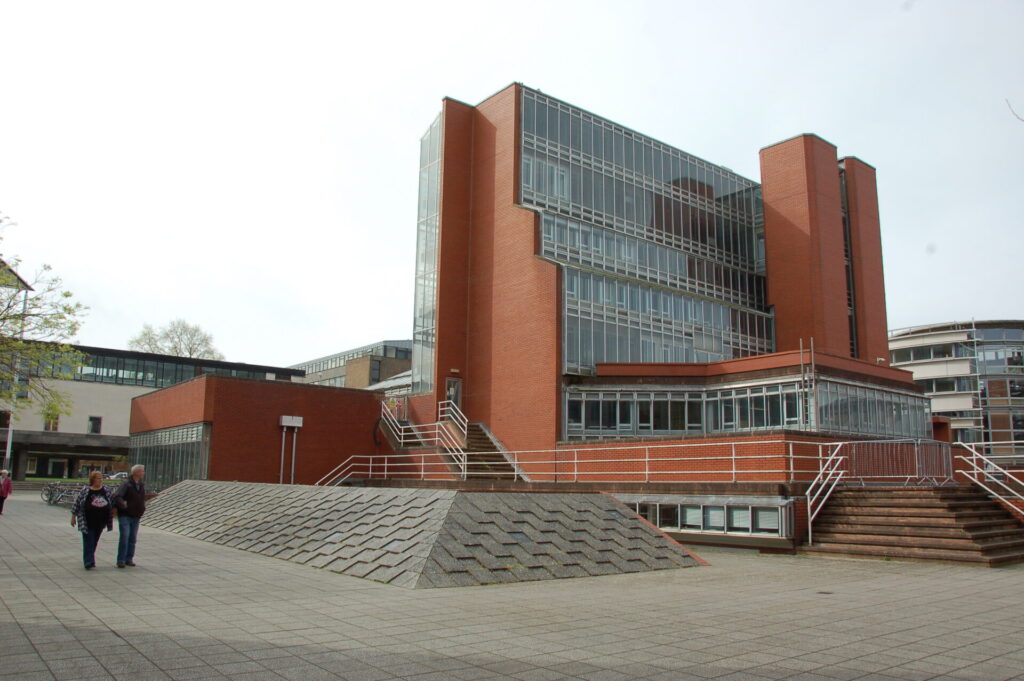
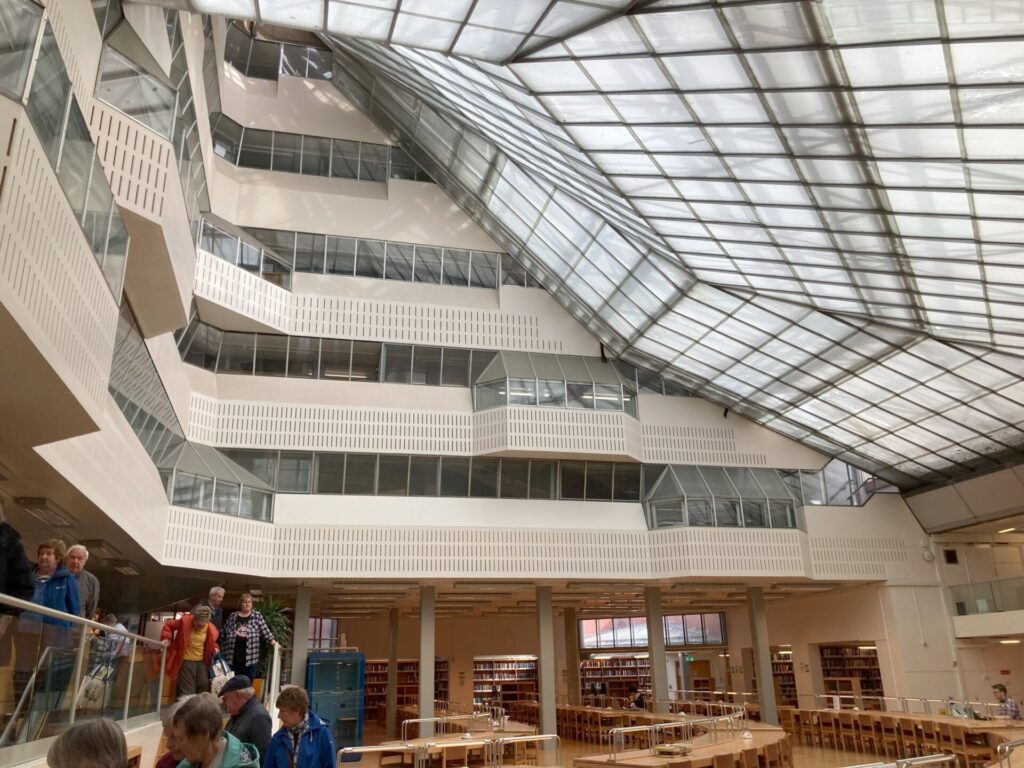
On our last day we visited the University History Library, designed by James Stirling in 1966; the building rapidly became both an icon and notoriously leaky. After an introductory talk we were free to browse the reading area and the bookstacks. The reactions of our members to the building were mixed, but not to its contents, one or two of them, reminded of their own history studies, had to be prized away from interesting books. Despite seeing the occasional strategically placed bucket it was encouraging that our librarian host told us that he loved the building and looked forward to coming to work every day.
The Seeley History Library - Reading Area
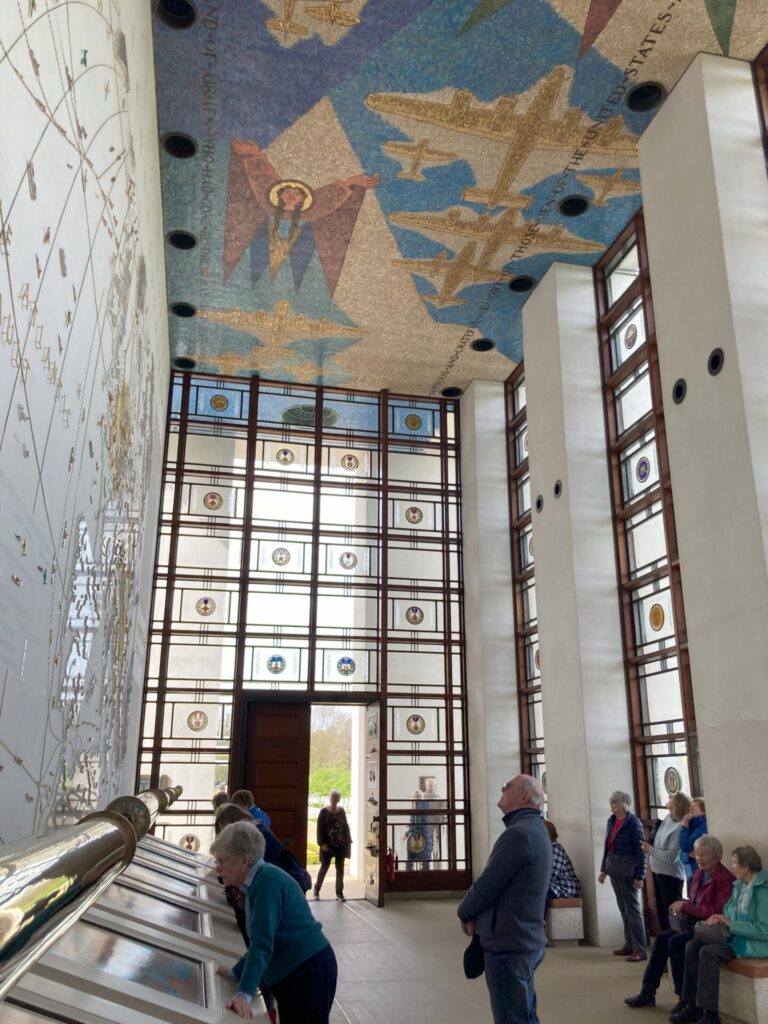
Our final visit was to the American War Cemetery at Madingley on the outskirts of Cambridge. This is the final resting place of American service people based in the UK from 1942-45 who died while on active service. It is a place of great solemnity, with all of the graves radiating out from a huge flagstaff carrying a vast American flag. To one side, along an axis defined by reflecting pools, is a memorial chapel, its interior is decorated with mural maps showing the various theatres of conflict where the servicemen and women fell. The whole place has been constructed with the best quality materials and workmanship, and is beautifully maintained and has a visual impact which is redolent of, at one extreme the Commonwealth War Graves in Northern France and Flanders and at the other the various memorials along the National Mall in Washington D.C. At one side of the site is a museum depicting the involvement of the United States in the whole of the Second World War. The study weekend was deemed to be a success by all the members who took part, most of whom said they would need to return home for a rest after a very full and stimulating four days.